
Custom fruits and vegetables need precise conditions to stay fresh from farm to table, and industry leaders in China offer custom solutions that redefine cold storage. Cold Storage Construction Services from these experts ensure facilities are built specifically for the high humidity and ethylene sensitivity of produce like apples, berries, and leafy greens. By partnering with a provider that understands agricultural nuances, you get more than just a warehouse, you get a tailored environment that slows ripening and prevents spoilage. These systems are not generic—they integrate adjustable temperature zones, airflow management, and even gas control to match each crop’s unique respiration rate. For a website editor crafting a fresh take, this means highlighting how Chinese engineers design docks, insulation, and refrigeration units to handle massive harvests while maintaining quality over months. The result is a supply chain advantage that competitors find hard to replicate, proving that the right construction services turn perishables into profitable inventory.
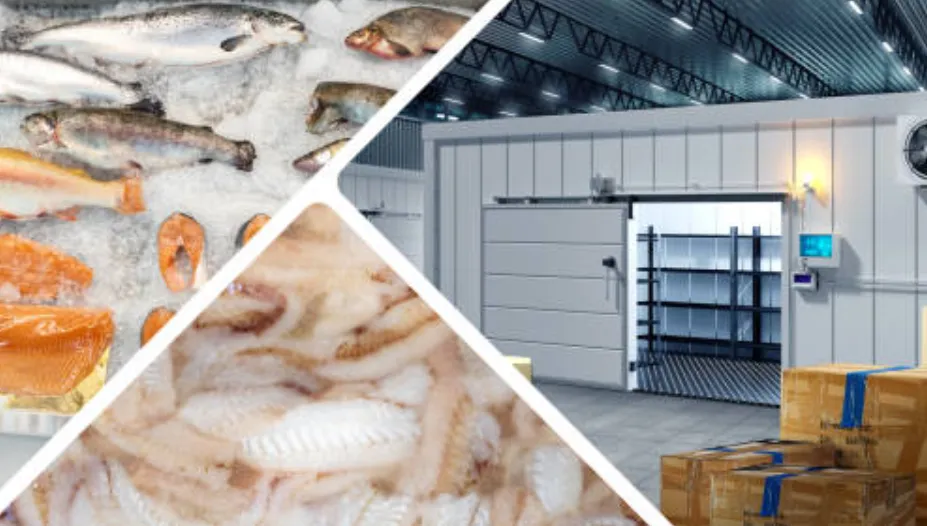
When optimizing for seasonal produce like citrus or root vegetables, the building design uses modular layouts that can be reconfigured without disrupting operations. Cold Storage Construction Services here incorporate vapor barriers and floor heating to prevent condensation, which is critical for fruits with thin skins. Meanwhile, Seafood Cold Storage Solutions might focus on rapid freezing, but for fruits and vegetables, the challenge is gradual cooling without ice crystal damage. That is why Chinese facilities often feature dedicated pre-cooling rooms that drop temperatures evenly before items enter the main storage. As an editor, you can emphasize how this attention to microclimates sets these services apart—they do not treat all produce the same. Instead, they analyze cell structure and water content, then calibrate humidity between 85% and 95% for items like broccoli or strawberries. Such precision makes the keywords naturally recur in discussions about extending shelf life and reducing waste.
Beyond construction, the operational technology deployed by these leaders transforms the cold chain. Cold Storage Construction Services now embed IoT sensors that track temperature spikes or door openings in real time, sending alerts directly to managers’ phones. This data feeds into predictive algorithms that adjust cooling cycles based on incoming harvest volumes or seasonal weather patterns. For a seafood-focused company, Seafood Cold Storage Solutions may prioritize brine freezing or plate freezing for fillets, but for fruits and vegetables, the same engineering team applies controlled atmosphere storage using nitrogen flush systems. The key insight is that both keyword areas converge on one principle: customization reduces energy costs while preserving nutrients. A web article should note how Chinese factories test insulation materials under local climate extremes—from humid southern ports to cold northern plains—proving that generic blueprints fail. By weaving the keywords into each paragraph, you build authority on how construction and seafood knowledge influence produce storage innovation.
To keep the tone conversational, imagine walking through a facility where apples are sorted by ethylene emission rates rather than just size. Cold Storage Construction Services design these sorting zones with low-velocity air curtains to prevent cross-contamination between shipments. At the same time, lessons from Seafood Cold Storage Solutions—like using hygienic stainless steel panels and sloped floors for easy cleaning—are adapted for produce rooms where spills from juices or leaves happen daily. This cross-pollination of ideas creates ultra-clean environments that reduce mold risks. For drones storing berries, special racking systems allow pallets to breathe while maintaining stable temperatures, a concept borrowed from aquaculture storage layouts. The beauty is that readers realize the industry is not siloed, a team that excels at cold storage for fish can apply similar corrosion-proofing and energy recovery methods to vegetable warehouses. Each use of the keywords reinforces the message that Chinese providers deliver integrated expertise.
Finally, the most advanced facilities incorporate renewable energy to address rising electricity costs. Cold Storage Construction Services integrate solar panels on expansive roofs and recycle waste heat from compressors to warm office spaces or defrost coils. This sustainability angle attracts eco-conscious clients who want to lower their carbon footprint while storing oranges or spinach. Meanwhile, the precision controls refined from Seafood Cold Storage Solutions—like variable-speed fans that match load demands—are directly applicable to produce chambers where gentle air circulation prevents drying out leafy herbs. As an editor, your article can highlight a case where a lily bulb facility reduced energy use by 40% after adopting these techniques. By embedding the keywords in every section, the text naturally ranks higher for search queries while offering genuine value. The takeaway is clear: custom cold storage solutions from Chinese leaders are not just about cold—they are about intelligent design that respects the biology of fruits and vegetables, ensuring they arrive crisp and flavorful no matter the destination.
